Stars at the lake
Drove out to the lake with no plan. Lay on the dock and counted shooting stars until I lost track.
Imagined
Bringing my sister next time, both of us bundled in blankets, her pointing out the ones I missed.
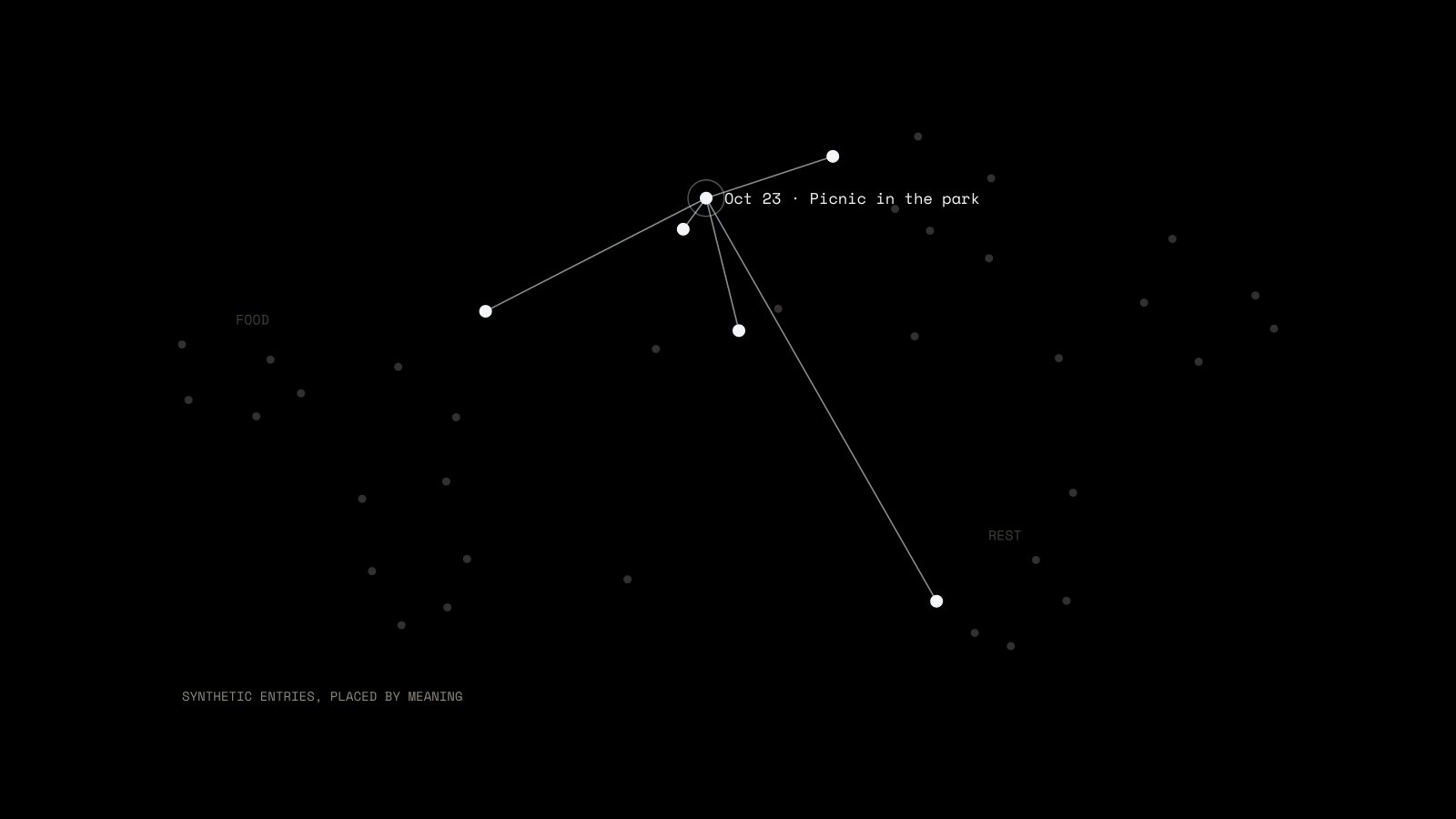 Synthetic entries, placed by meaning
AI tool · MIT Media Lab
Drawing from memories to imagine positive futures
An AI journal that reads your past entries and suggests one small thing to do next, then asks you to imagine doing it. In a two-week randomized trial with 55 people, it significantly lowered depression scores.
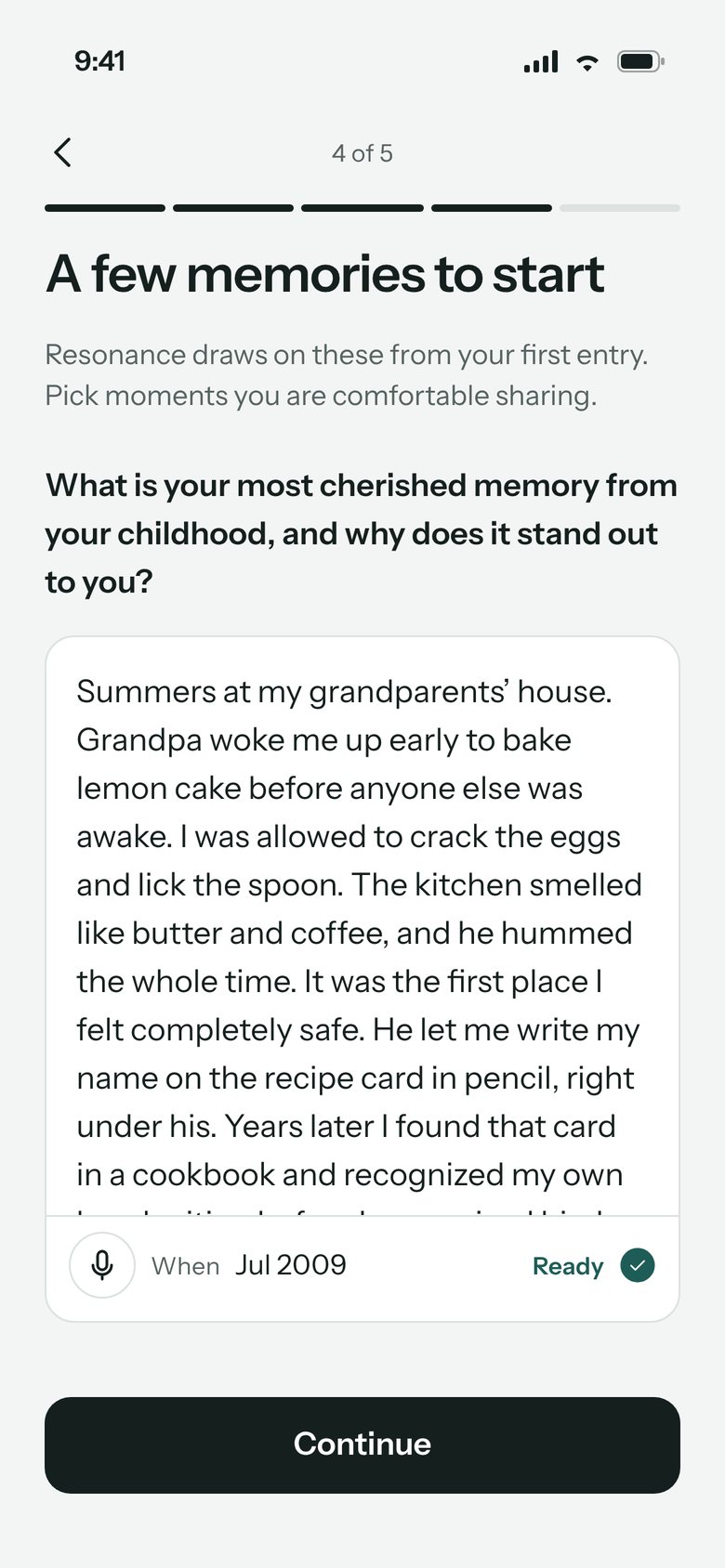
People draw on their past whenever they imagine the future, and that habit matters for mental health. Resonance is built to strengthen it. You log a meaningful moment from the last 24 hours, and it answers with an activity grounded in your own earlier entries.
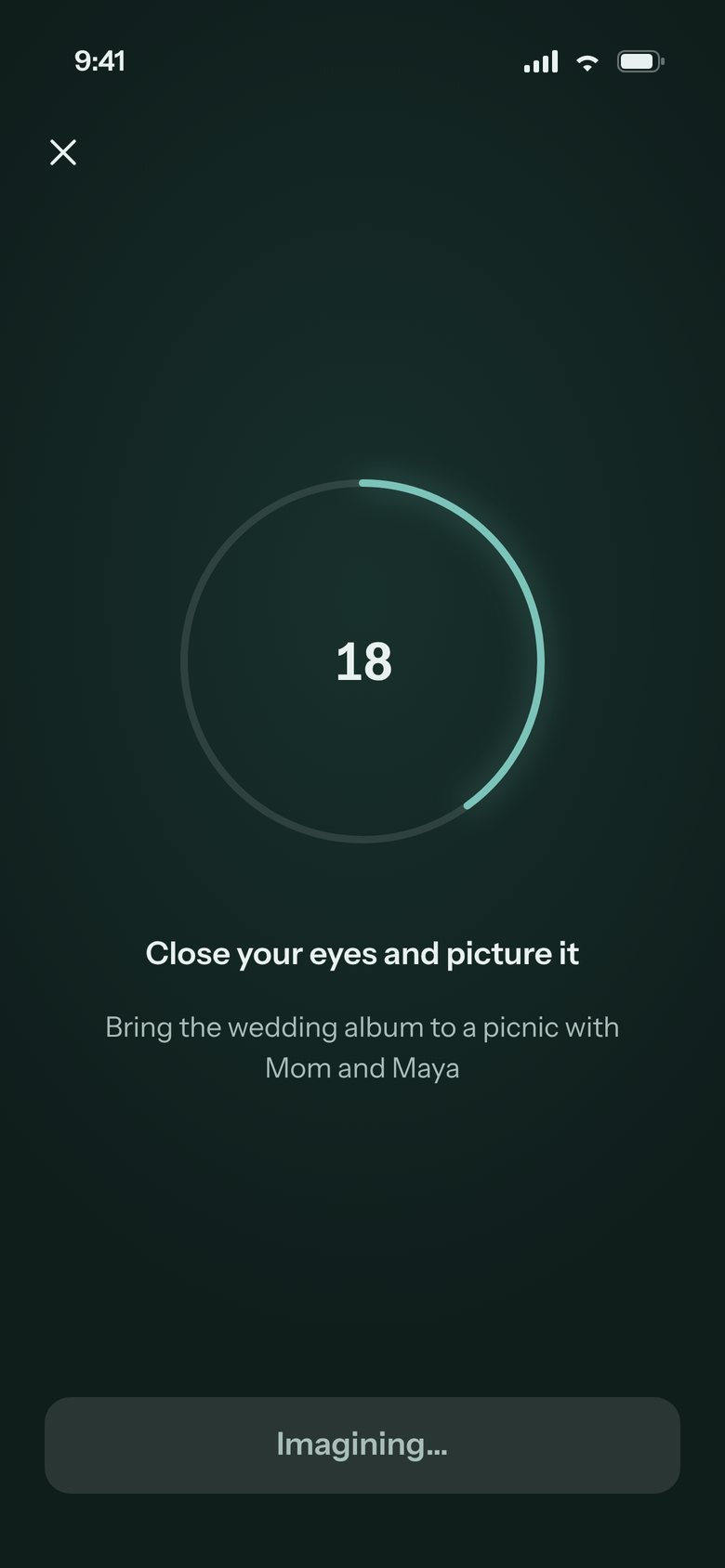
Then you close your eyes for 30 seconds, picture yourself doing it, and write down what you saw. That imagined scenario is saved next to the memory that prompted it.
Interface refreshed for this case study. The study used an earlier version. Synthetic entries.
Each new memory is embedded and compared with that person’s own past entries. The five closest go to GPT-4 Turbo in two steps: it picks a positive emotion to aim for, then writes a suggestion under 60 words that quotes those entries. Every earlier suggestion goes in as an example to avoid, so ideas stay new. New users seed five memories at sign-up, so retrieval has something to draw on from the first day.
Drove out to the lake with no plan. Lay on the dock and counted shooting stars until I lost track.
Bringing my sister next time, both of us bundled in blankets, her pointing out the ones I missed.
Walked around the reservoir with Priya and told her how I have been feeling lately. She just listened.
Doing the same loop next Sunday, coffee in hand, asking how she is doing for once.
The study version did its job but read like a research form, with a character counter that flashed red and green and a red close button beside the main action. The refresh keeps every step and constraint and changes the surface. One typeface, four sizes, two weights, an 8px grid, and one colour that means one thing: this came from your past. The 200-character minimum became a quiet progress ring, and the 30-second imagination became a full-screen timer.
A two-week randomized controlled trial, measured with the PHQ-8 depression survey. The control group kept the same journal with the AI taken out.
Depression scores fell significantly for the Resonance group and held flat for the control group. Suggestions worked best when they were personal, novel, and quoted the user’s own memories, and people who said they were likely to act on a suggestion gained more positive affect.